Direct To Garment (DTG) Printing
Sunny Side Ink has taken custom apparel to the next level with Direct To Garment (DTG) printing services. Continuing our commitment to quality, creativity, and customer satisfaction, we are delighted to offer this revolutionary method of applying detailed designs, logos, and artwork directly onto fabric. Unlike traditional screen printing, which utilizes multiple layers and colors, DTG printing applies innovative inkjet technology to print high-resolution, full-color images directly onto hoodies, T-shirts, caps, and more.
Contact Us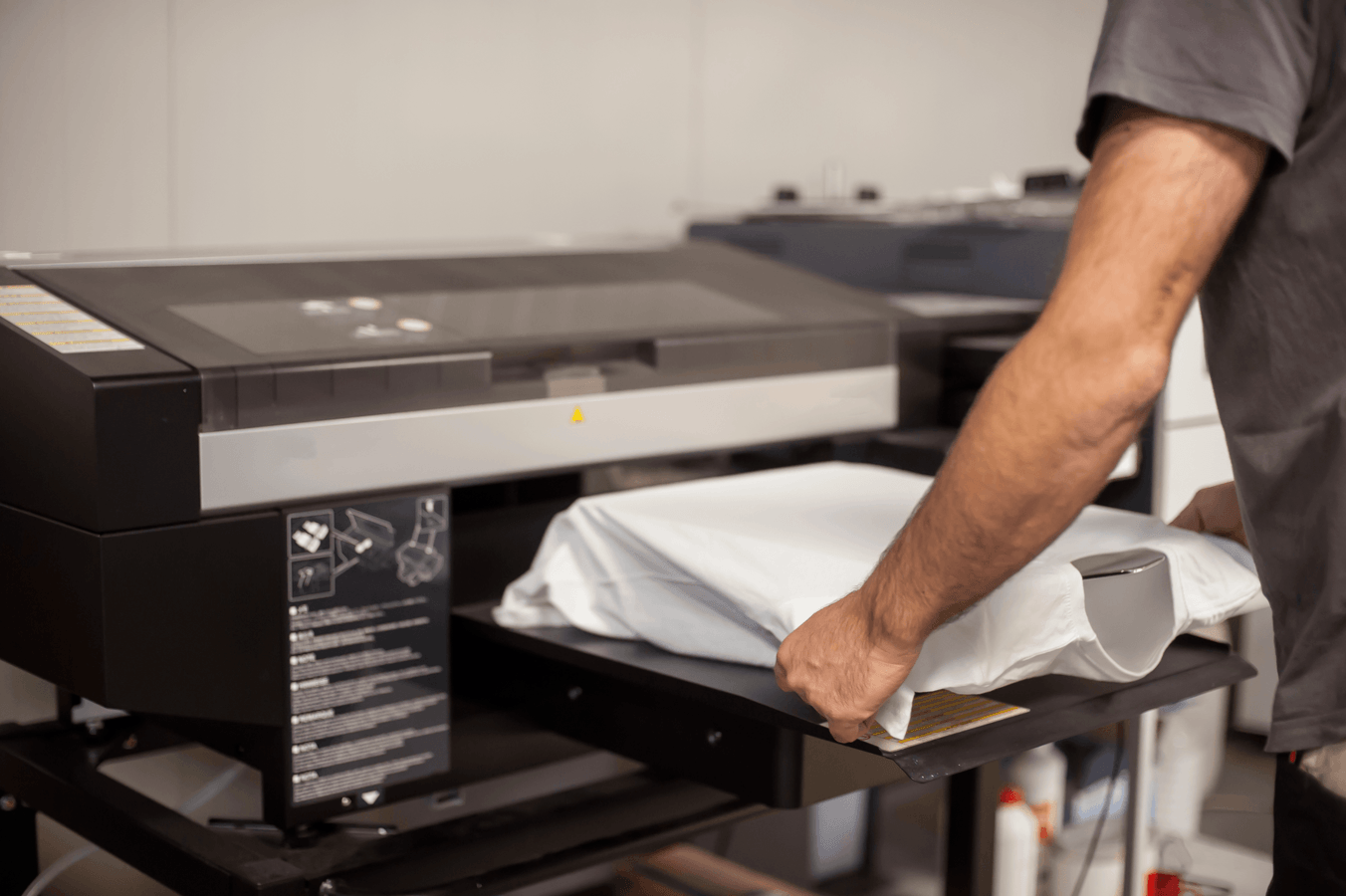
Direct to Garment Printing at Sunny Side Ink
Direct-to-Garment Printing from Sunny Side Ink
Direct to garment printing is at the heart of modern custom apparel production, offering unmatched flexibility and quality for creators, small businesses, and anyone seeking high-quality, detailed designs. This page explains what direct to garment printing is, how it works, and why it’s ideal for small businesses, creators, and anyone seeking high-quality custom apparel. Direct-to-garment printing (DTG) is a process of printing on textiles using specialized aqueous ink jet technology. DTG printing allows for detailed, full-color images with a soft feel, perfect for intricate designs and high-resolution images.
DTG printers can print on a variety of fabrics, but they work best on natural fibers like cotton and cotton blends. This makes DTG printing especially effective for t-shirts, tote bags, and other apparel. The process produces vivid, durable prints with a soft feel, and is suitable for both small and large orders. Most DTG printers use water-based inks that are more environmentally friendly and produce vibrant colors, working best on natural fabrics and natural fibers such as:
- Cotton
- Bamboo
- Hemp
- Linen
DTG printing is particularly suitable for independent creators and small businesses, allowing you to print a single shirt or fulfill large runs with no minimum order requirements. It is the go-to printing method for print-on-demand entrepreneurs and is ideal for small-batch, on-demand, and custom apparel production. Unlike traditional screen printing and other traditional printing methods, DTG offers minimal setup, a wider color range, and is perfect for intricate, multi-color designs. The learning curve for DTG printing is less steep than for screen printing, making it accessible for beginners and small businesses. DTG printing is also faster to set up and less labor-intensive compared to traditional screen printing methods, and supports on-demand manufacturing, which is beneficial for businesses looking to minimize waste and inventory costs.

DTG Printing for Small Businesses and Creators
DTG technology and printing solutions offer unmatched versatility for custom apparel businesses, enabling you to print t-shirts for events, streetwear, personalized gifts, and more. DTG printing is a cost-effective printing method that gives small businesses and creators an easy way to produce intricate designs and create custom clothing. It is ideal for high-detail, multi-color, and small-batch orders (1-12 items), and allows for detailed, full-color images with a soft feel, making it perfect for intricate designs and high-resolution images. DTG printing allows small businesses to create personalized gifts and custom apparel quickly and reliably.
Types of DTG Printers
There are three main types of DTG garment printers:
- Entry-level DTG printers: Compact, CMYK only, great for home studios or small retail spaces.
- Commercial DTG printers: Faster, print on both light and dark garments, suitable for growing businesses.
- Industrial DTG printers: Designed for high-volume production, capable of printing hundreds of garments per hour.
These garment printers are designed for printing directly onto textiles, making the printing technique versatile for t-shirts, tote bags, and other apparel.
Next, we’ll explore how our DTG process ensures sharp images on every item.
Sharp Images on Every Item We Print
DTG Printing Process Steps
DTG printing delivers outstanding print quality, achieved through proper pre-treatment and curing processes. The DTG printing process involves three key stages: pre-treatment, printing, and curing.
- Pre-treatment: Essential for DTG shirt printing, especially for multi-color designs and dark shirts, as it allows the ink to adhere evenly to the garment fibers and enhances print quality. Pre-treatment is also important for light colored garments to ensure color vibrancy and durability. The pre-treatment process allows water-based inks to bond more fully to the garment, especially important for white ink on dark garments.
- Printing: After pre-treatment, the garment is printed using digital inkjet technology that applies ink directly onto the fabric. This step enables high-resolution images and detailed, full-color designs.
- Curing: After printing directly onto the garment, the curing process uses heat to bond the ink permanently to the fabric, ensuring long-lasting print quality. There are two main curing methods for DTG printing: conveyor dryer and heat press.
Garment DTG printing and garment printing direct allow for high resolution images and detailed, full-color designs on a variety of printing products, including:
- DTG shirts
- Baby clothes
- Shirts
- Caps
- Shoes
- Tote bags
DTG printing is ideal for small-batch production, has no minimum order requirements, and is suitable for intricate, multi-color designs. It is faster to set up and less labor-intensive compared to traditional methods, and uses water-based inks for a soft feel and vibrant colors.
The benefits of quicker completion never diminish the durability. We use eco-friendly ink that adheres to fabrics without cracking or peeling. When you partner with Sunny Side Ink for a small or bulk order, you can be sure the design will withstand the test of time and continue to represent your ideal image wash after wash. At Sunny Side Ink, we excel in delivering uncompromising quality as quickly as possible.
Now, let’s look at how curing and finishing complete the DTG process for lasting results.
Curing and Finishing: The Secret to Lasting Prints
When it comes to DTG printing, the journey doesn’t end once the design is printed onto the garment. Curing and finishing are the behind-the-scenes heroes that transform a freshly printed shirt into a high quality, long-lasting piece of custom apparel. These steps are essential for ensuring that every print from Sunny Side Ink stands up to daily wear and repeated washing.
After the DTG printing process, the printed garment must be cured so the ink bonds securely with the garment fibers. This is typically achieved by applying heat using a heat press or a conveyor dryer. Unlike screen printing, which uses plastisol inks that sit on top of the fabric, DTG inks are water-based and penetrate the fibers, requiring precise heat and timing to set the print without compromising color vibrancy or wash fastness. The right curing process prevents smudging, fading, or cracking, especially on dark garments where white ink underbase is used for maximum color pop.
The specifics of curing—such as temperature and duration—depend on the type of DTG printer and ink being used. Most DTG printers, especially industrial DTG printers, come with detailed guidelines to ensure optimal results. Following these recommendations is crucial for achieving consistent, high quality prints, whether you’re producing a single shirt or a bulk order for a corporate event.
To get the best results, it’s important to use premium DTG inks and advanced RIP software. RIP software helps manage color accuracy and ink distribution, which is especially important for detailed designs and full color images. White ink is essential for printing on dark colored garments, while the right combination of ink and curing ensures that prints remain vibrant and durable.
Finishing Touches
Finishing is the final touch that sets professional print shops apart. This stage includes folding, packaging, and labeling each printed garment, ensuring that every order arrives looking polished and ready to wear or distribute. For businesses in the custom apparel industry, investing in efficient finishing processes means faster turnaround and a more impressive product for customers.
At Sunny Side Ink, we understand that curing and finishing are just as important as the printing itself. By mastering every step of the DTG printing process, we deliver printed garments that not only look great but also stand the test of time. Whether you’re a small business, an event organizer, or an independent creator, our attention to detail ensures your custom apparel always makes a lasting impression.